Showing posts with label Treatment - Diet. Show all posts

Sunday, November 13, 2011

Bilberries May Help Control IBD

Bilberries (or huckleberries) may help control symptoms of inflammatory bowel disease. Researchers in Europe suggest positive results (see article) from a study of colitis in mice. Blueberries are a close relative to bilberries, so they might serve as a more accessible alternative.

Here's an excerpt:
Bilberries, which are a close relative to blueberries, contain anthocyanins, pigments that have antioxidant, anticancer, and anti-inflammatory properties. Previous studies show bilberries are effective in the management of diarrhea, which is one of the main characteristics of inflammatory bowel disease.

Tuesday, November 8, 2011

The Low FODMAP Diet

IBD and IBS must be becoming more widespread (or at least there must be more awareness about them), because I read an article in the Wall Street Journal about a new diet meant to address IBS. It's called the Low FODMAP's diet.

Here's an excerpt from the article:

The theory is that many people with IBS have trouble absorbing certain carbohydrates in their small intestines. Large molecules of those foods travel to the colon, where they are attacked by bacteria and ferment, creating the telltale IBS symptoms of gas, bloating, constipation or diarrhea.

A long list of foods—including dairy products, some fruits and vegetables, wheat, rye, corn syrup and artificial sweeteners—can potentially create such problems in susceptible people. Collectively, they're known as Fodmaps, an acronym that for stands for Fermentable Oligosaccharides, Disaccharides, Monosaccharides and Polyols.

The general theories behind this aren't anything new. In fact, they are very similar to the Specific Carbohydrate Diet in some ways. But if you look at what's "legal" vs. "illegal", there are some serious contradictions between the diets. I suppose that's not necessarily surprising, though, as IBS and IBD are different. But just interesting that one diet doesn't address both. I wonder if that hints to the cause at all?

At any rate, here's the graphic from the WSJ article that covers some of the low and high FODMAP foods:

Wednesday, November 10, 2010

Broccoli Fiber Combats Crohn's Disease

Saw this article in Life Extension magazine about broccoli:

An article published online on August 25, 2010 in the journal Gut reveals that fibers found in broccoli and plantain block a stage in the development of the Crohn's disease, an inflammatory bowel disease. The stage involves a process known as translocation, which is the invasion of microfold cells (M-cells) lining the colon by bacteria, particularly E. Coli, which tend to adhere to one another.

Crohn’s disease is uncommon in countries whose citizens regularly consume fibrous fruits and vegetables, while the incidence of the disease has increased in Japan with the rise of Westernized dietary habits. Additionally, some enteral feeds have been shown to result in clinical remission. “It is therefore a plausible hypothesis that dietary factors may have either harmful or protective roles in Crohn’s pathogenesis as a consequence of their effects on the interaction between the host epithelia and intestinal microbiota,” the authors write.

Dr Barry J. Campbell of the University of Liverpool and his associates tested the effects of soluble fiber from leeks, apples, broccoli and plantain in cultured human M-cells. Concentrations of 5 and 50 milligrams per milliliter plantain fiber, and broccoli fiber concentration of greater than 0.5 milligrams per milliliter helped inhibit E. Coli translocation. While apple and leek failed to show an inhibitory effect, translocation of E. Coli was enhanced by the fat emulsifier polysorbate 80, which is included in some enteral feed solutions administered to Crohn’s disease patients and is a common dietary additive. The results were confirmed in epithelial tissue samples derived from humans who underwent surgery for colon cancer or colonoscopy.

“These studies show that different dietary components may have powerful and contrasting effects on bacterial translocation across intestinal M-cells,” the authors conclude. “These effects may be relevant to the role of environmental factors in the pathogenesis of Crohn’s disease and suggest possible novel therapeutic approaches.”

This is related to an earlier post I had about broccoli. Eat your broccoli!

Wednesday, July 7, 2010

Broccoli extract effective against IBD and UC

Saw an article about how a plant-derived compound called Phenethylisothiocyanate (PEITC) showed potential anti-inflammatory activity and reversed many symptoms of ulcerative colitis. The PEITC compound is found naturally in the Brassica genus of plants, which includes cabbage, cauliflower, watercress, and broccoli.

An excerpt:
"I tested this substance in a mouse model that is already established and widely used. What we found is that it not only alleviates several clinical signs of ulcerative colitis — for example, it attenuates the damage that occurs in the colon tissues and colon epithelium, as well as the clinical signs like diarrhea and blood in stool. The weight loss is a major sign in colitis and that was alleviated, too," Dey added.
Good evidence to suggest that you should eat your greens! If you hate broccoli, you'll just have to get over it cause it's good for you.

Thursday, June 17, 2010

Resveratrol Improves Inflammatory Bowel Disease Symptoms

Saw an article about a new study that found that resveratrol, an antioxidant found in grapes, improved symptoms of inflammatory bowel disease (IBD).

Here's an excerpt from the article:

Resveratrol is a phytonutrient (phyto means “plant”) that is the subject of considerable research because of its anti-inflammatory, antioxidant, anti-tumor, and immune system boosting properties. Previous studies have suggested that resveratrol enhances brain function and builds resistance to stroke, helps withweight loss, inhibits prostate cancer cell growth, and protects against diabetes.

Resveratrol’s anti-inflammatory abilities are of special interest for possible treatment and prevention of inflammatory bowel disease, of which ulcerative colitis and Crohn’s disease are the two most common types. In the current study, which appears in theEuropean Journal of Pharmacology, researchers conducted a placebo-controlled study in which one group of mice were given 20 mg of resveratrol per kilogram of food and the other group received placebo. The study period lasted 30 days.

Grape juice is my primary dietary source of carbohydrates (because it is SCD compliant), so this is encouraging news. It also reinforces why the SCD diet may work.

Monday, June 7, 2010

Meat Proteins Linked to Bowel Disease in Women

A new study from France revealed that eating lots of animal protein appears to increase the risk of inflammatory bowel disease (IBD) in women. The study was conducted on 67,000 women in France over a long time period to find risk factors for different diseases, including cancer and other common illnesses. There are no conclusions that are being drawn from the study, but it does suggest that diet does potentially play a role in the disease.

An excerpt:

Women who consumed the most protein were at more than triple the risk of being diagnosed with IBD, the researchers found; animal protein accounted for most of the risk. Risk was specifically associated with high intake of meat and fish, but not with dairy products or eggs.

While experts have long suspected that diet might play a role in inflammatory bowel disease, Carbonnel and his colleagues note, the only links identified previously were with eating a lot of fats and certain kinds of sugars. Those studies were more prone to error than forward-looking or prospective studies like the current investigation. There have also been several studies linking vitamin D deficiency to IBD.

Another excerpt regarding the potential link to IBD:
Meat could contribute to inflammatory bowel disease risk because digestion of animal protein produces many potentially toxic "end products," such as hydrogen sulfide and ammonia, the researchers note. Also, Carbonnel pointed out, a high-protein diet could alter the mix of bacteria that live in the colon.
The article doesn't comment on it, but I would argue that there is potentially another possible causation here. The reasons suggested are that the high intake of proteins is either generating toxic end-products or causing dysbiosis of the bacterial mix. If that were the case, though, this type of correlation would be present with other types of animal protein sources, including dairy and eggs. But there was not. (As an aside, I would also expect that other food types - e.g. starches, sugars, etc. - also produce these types of toxic end-products as well). I think another alternative cause could be the bacteria present in meat and fish stocks. Contamination from these food sources (e.g. MAP), could also be an explanation. Hopefully that's a third alternative they'll do additional research on. Either way, interesting study.

Tuesday, May 4, 2010

Olive Oil Good, Aspirin Bad

Saw results of two different studies. One was about how Olive Oil (specifically oleic acid) helps to prevent inflammatory bowel disease. The second was about how aspirin increases the risk of Crohn's Disease by five times!

Saturday, May 1, 2010

Recent Review of Diet's Role in Inflammatory Bowel Disease

Came across this recent survey (PDF) of the different dietary causes and treatments of inflammatory bowel disease, including Crohn's Disease. Nice article that touches on several different dietary alternatives and their efficacy (when tested in controlled studies). Here's the abstract of the article (cut-and-pasted):
Many studies have looked at connections between diet, etiology, signs and symptoms associated with inflammatory bowel disease (IBD). Although these connections are apparent to clinicians, they are difficult to prove qualitatively or quantitatively. Enteral feeding and polymeric diets are equally effective at bringing about remission in Crohn’s disease (CD). Parenteral feeding is also effective, although none of these methods is as effective as corticosteroid therapy. However, enteral feeding is preferred in the pediatric population because linear growth is more adequately maintained via this route. Exclusion diets in patients brought into remission using an elemental diet have been shown to maintain remission for longer periods. Studies that aim to isolate culpable food groups have shown that individuals react differently on exposure to or exclusion of various foods. The commonly identified food sensitivities are cereals, milk, eggs, vegetables and citrus fruits. Studies that have looked at gut mucosal antigen behavior have shown higher rectal blood flow, in response to specific food antigens, in those with CD over healthy subjects. Exclusion of sugar shows little evidence of amelioration in CD. Omega 3 fatty acids show promise in the treatment of IBD but await larger randomized controlled trials. Patients frequently notice that specific foods cause aggravation of their symptoms. Whilst it has been difficult to pinpoint specific foods, with advances in the laboratory tests and food supplements available, the aim is to prolong remission in these patients using dietary measures, and reduce the need for pharmacotherapy and surgical intervention.
Of course the conclusion of the study basically just says "we need to do more research", but that's to be expected.

PPAR-gamma Protein Key to Inflammatory Bowel Disease

Researchers have found a new potential treatment option for inflammatory bowel disease. The protein PPAR-gamma was found to help restore the body's natural defenses against gut infections from bacteria and could be used as a treatment for Crohn's Disease.

Here's an excerpt:

Samples taken from the colons of humans diagnosed with Crohn's disease also show reduced levels of the antimicrobial peptides, or defenses, regulated by the PPAR-gamma protein, they wrote.

Chamaillard said foods or diets containing conjugated linoleic acid (CLA) can also boost PPAR-gamma activity and have been shown to improve colitis and colitis-associated cancer.

CLA is primarily found in milk and meat products.

"In the short-term, managing the disease is what we are looking at, but it may also be that in the future we could develop a way of stopping it," Chamaillard said.

But he added that curing Crohn's disease would mean being able to identify those at highest risk before they contracted it and then being able to boost PPAR gamma-related defenses to ward it off -- both areas that would need more research.

So how could you add more CLA to your diet? I checked out the CLA Wikipedia page and found the following:

Of all foods, kangaroo meat may have the highest concentration of CLA.[34] Food products (e.g. mutton and beef) from grass-fed ruminants are good sources of CLA, and contain much more of it than those from grain-fed animals.[35] In fact, meat and dairy products from grass-fed animals can produce 300-500% more CLA than those of cattle fed the usual diet of 50% hay and silage, and 50% grain.[36]

Eggs are also rich in CLA, and it has been shown that CLA in eggs survives the temperatures encountered during frying.[37]

Some mushrooms like Agaricus bisporus and Agaricus blazei, are rare vegetable sources of CLA.[38][39]

Very exciting to see research being done (and producing results) regarding natural methods of treating Crohn's. I'm looking forward to seeing how this research advances. In the meantime, stock up on the kangaroo burgers.

Wednesday, December 30, 2009

Probiotics May Help Prevent Crohn's Disease

Saw an interesting mention of a research report in a Wall Street Journal article. Here's the excerpt:

Crohn's Disease: Probiotics—live microorganisms that appear to improve gastrointestinal health—may prevent the onset of Crohn's disease, according to a study in the Proceedings of the National Academy of Sciences. The researchers fed young mice, who had been bred to develop a Crohn's-like inflammatory bowel disease, diets that included a high dose of eight probiotic bacteria strains. The disease, ileitis, was entirely prevented in five of those 11 mice, and markedly less severe in five of the remaining six. A lower dose of the bacteria, given to another set of mice, provided little beneficial effect. The researchers suggested, based on necropsies of the mice, that the probiotics guarded against ileitis by stimulating the immune system of the gut lining.

Caveat: It's not known whether probiotics would prevent actual Crohn's disease in humans, or what dose would be required. (Read the Report)

This kind of raises an interesting question around the Specific Carbohyrdrate Diet (which I'm using). How do you train or sensitize your immune system to handle different types of gut bacteria if you're on a diet that is targeted at eliminating many strains of bacteria in the gut? Perhaps you slowly introduce new bacteria (or foods that allow those other bacteria to develop). That way your body can slowly develop (or re-develop) it's sensitivity to these.

Thursday, October 29, 2009

Scientists Link Diet and Immune System

Saw this article about Australian scientists that found a "direct link" between diet and how the immune system functions. The scientists found that a specific short-chain fatty acid (created when bacteria breaks down dietary fiber) binds with an immune cell receptor to influence immune response. The article didn't provide many details on the exact findings, but they were hopeful that it could help explain how dietary changes could be a contributing factor in the rise of autoimmune disorders.

Here's an excerpt:

"When (immune cells) go bad they cause inflammatory diseases, so asthma, rheumatoid arthritis, inflammatory bowel disease ..." Prof Mackay said.

"We think one of the mechanisms for their normal control is short chain fatty acids binding to this receptor.

"And if we were to speculate on the real significance of this, we believe firmly that the best explanation for the increase in inflammatory diseases in western countries ... is our changes in diet."

A lack of dietary fibre could also be behind the rise in type 1 diabetes, Prof Mackay said.

The research suggests that having a healthy diet rich in fruits, vegetables, grains, nuts and seeds would reduce a person's risk of autoimmune disease.

Saturday, September 12, 2009

Foods For Healthy Weight Gain

Just read this post about how to gain weight when dealing with diseases like Crohn's. Obviously everything about eating pasta, rice, potatoes, and such won't quite work on the SCD diet. But I thought the calorie counts were very interesting. Here's the excerpt:
Plan to eat about 6 meals daily, and eat about 500 calories a day more than usual. Sugary products like milkshakes (which could be made with skim milk and low-fat ice cream), jellies, jams, cakes and cookies can accomplish that goal easily, short-term.

Eating a balanced diet and managing weight long-term should be done thoughtfully. You don’t want to only gain fat and no muscle. Any kind of SAFE dieting program suggests eating healthy foods while exercising, to keep the body at an ideal weight while building muscle.

Know your recommended weight for your height and body type. The average 165-pound man, between 19 to 24 years old, needs 3000 calories a day to maintain his weight. But, as we age, we need fewer calories, so that same man will only require 2700 calories daily from the age of 25 to 49. And even less beyond that.

An average woman, ages 19 to 24, will need 2100 calories daily to maintain a weight of 127 pounds. As she ages, up to 49, she will only need 1900 calories.

Good guidance. The article also mentions to work with a nutritionist along side your doctor. It's tough to get 3000 to 3500 calories a day on the SCD, but I suppose I'll have to find a way.

Thursday, September 10, 2009

SCD Website - "No More Crohn's For Me"

Came across this website sharing best practices (recipes, etc.) for he Specific Carbohydrate Diet.

Saturday, September 5, 2009

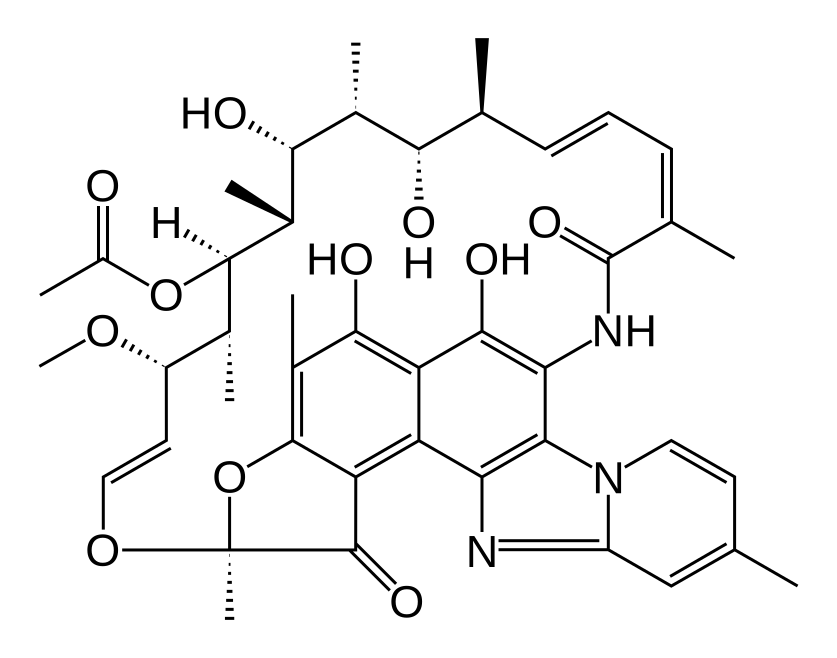
Rifaximin (Xifaxan) Antibiotic Used to Treat Crohn's

Rifaximin
I came across a drug called Rifaximin (Xifaxan) via a post about IBD drugs in the pipeline in the About.com IBD blog.

The drug has been around and used for over 20 years to treat travelers' diarrhea. The drug is an antibiotic that works exclusively in the GI tract and does not enter the bloodstream. Here's the excerpt from the About.com blog that comments on its efficacy:

Rifaximin (Xifaxan) is currently being studied for use in treating severe Crohn’s disease. This drug, manufactured by Salix Pharmaceuticals, is an antibiotic currently approved for use in traveler’s diarrhea. Rifaximin is not absorbed into the bloodstream like other antibiotics, but instead affects the digestive tract directly. The theory is that intestinal bacteria may have a connection to the inflammation in Crohn’s disease, and an antibiotic may be effective if it kills these bacteria.
In a 16-week study of rifaximin, 78 percent of the patients with Crohn’s disease experienced an improvement in their disease, and 59 percent went into remission.
This drug is also being studied for use in treating pouchitis, a complication that can occur after j-pouch surgery. In one study, 11 patients for whom other therapies had failed received either 400 mg of rifaximin twice a day or 200 mg three times a day -- both groups showed improvement.
I investigated the efficacy of this drug a bit more in terms of its use for Crohn's. I came across a website where folks post their experiences with drugs. There were two pages that were relevant, one for primary treatment of Crohn's and the other (with more responses) regarding maintenance of Crohn's.

From reading through the reviews, it appears that the drug provides quick relief of symptoms, but that relief appears to be temporary if you stop taking the drug (and even if you continue taking it). One person, for instance, went on a regimen combining Xifaxan, probiotics, and Boswellia serrata. Here's an excerpt from that person's experience I thought was worth capturing:
Xifaxan for Crohn's I take this med for Crohn's disease, my doc is trying it although it isn't a "recognized" Crohn's drug yet. I take 2-200mg pills twice a day. It is very easy to take, coated tablets do not taste bad although they are on the larger side. I do not feel nauseous on them or anything, no side effects at all. Can be taken with or without food. After 24 hrs on this (two doses) I had my first solid "BM" in a very long time, it worked like a charm. It continued to work for 4-5 days when I started getting BMs more frequently and less solid. I realized that this is probably killing off the good bacteria so I started supplementing with a several-strain probiotic which has helped (I take the probiotics between the doses of Xifaxan, not at the same time which would be useless).

One huge drawback of this medicine is the cost. My insurance has told me they won't cover it, so I am in the process of appealing that and hopefully they will cover it because a one month's supply costs $1100.00. Nope I'm not kidding. There is no generic.

Overall I think it has done me some good and hopefully my results will continue to be positive. Looking forward to reading about other people's experiences with this drug.

**Update 6/26/05
I have continued taking this drug along with Boswellia serrata capsules, probiotics, and a multivitamin and as of 2 days ago I was officially in remission! I am very pleased with the results and would encourage others to try it. Please read my rating on boswellia too because I truly believe that boswellia had a big impact on my remission as well as this antibiotic. Also, my insurance did eventually cover the entire cost of this medicine but my dr had to send a letter before they would do it.
Another person combined use of the Xifaxan with the Specific Carbohydrate Diet and probiotics and seemed to have positive results as well:
I was diagnosed with Crohn's disease in 2002. Since then I have tried just about everything to cure myself of this disease. Through my journey I have discovered that the Specific Carb Diet combined with a course of Xifaxan and high quality six strain probiotics (powder form) from customprobiotics.com has put me very close to remission. The first few days in Xifaxan caused severe painful bloating (die off of the bad bacteria) and then I was ok. You must stay way from bad carbs (ie. sugar, bread, cereal) and dairy if you want to get well.
The drug, combined with other regimens, certainly appears to have promising results and hence warrants further investigation. However, the use of antibiotics long-term is rather disconcerting to me. My assumption is that you need more than just a few strains of probiotics in your intestines to be really healthy (e.g. creation of Vitamin K). Can you really live your entire life taking antibiotics?

Sunday, August 2, 2009

Low-carb, high protein diet

I came across this via another web search. It's off of a ministry website. Perhaps the pastor is really into health? Here's the link to the diet. I only skimmed it, so will have to read it in more detail another time. There is a lot of content. Unclear how much of it is opinion vs. real research.

Sunday, July 19, 2009

The Specific Carbohydrate Diet

I read through the Specific Carbohydrate Diet website (Breaking the Vicious Cycle). The basic premise of the diet is that proper GI function is dependent on having an appropriate balance of bacteria and microflora. When that balance is damaged, a vicious cycle is started that leads to the failure of the GI tract, GI diseases, and other related diseases stemming from malnutrition and the increase in toxins.

The GI tract has over 400 different kinds of bacteria (5 to 7 lbs of it in fact). Much of that bacteria should be "good" bacteria - organisms that aid in the digestion of foods and creation of vitamins. There are also "bad" bacteria present. These bacteria compete for limited space in your digestive system. These bacteria come into play, in particular, when you eat food that your body can't digest on its own. Whatever bacteria is present will break down and digest the bacteria. Good bacteria does good things while digesting this material. Bad bacteria produce bad things - like gas, toxins, etc.

This is where the "vicious cycle" begins. The good bacteria are lost (likely due to a poor diet or antibiotic drugs that are taken for other illnesses). In the absence of good bacteria, the bad bacteria proliferate. These bad bacteria contribute to inflammation in the GI tract. That inflammation further decreases the digestive tracts ability to absorb nutrients into the body. The lack of nutrition weakens the immune system, decreasing the body's ability to deal with the bad bacteria. The inflammation and change in pH also contribute to the loss of good bacteria.

And then the result of all of this is disease first in the GI tract - Crohn's disease, IBD, collitis - and then disease throughout the body - arthritis, excema, psoriasis, etc. Here's an explanation from the website on the vicious cycle and how it works:
When the balance in the gut is disturbed, an overgrowth of intestinal flora can result. Microbes migrate to the small intestine and stomach, inhibiting digestion and competing for nutrients. The gut then becomes overloaded with the byproducts of their digestion. This bacterial overgrowth can be triggered by overuse of antacids, reduced stomach acidity due to aging, weakening of the immune system through malnutrition or poor diet, and alteration of the microbial environment through antibiotic therapy.

The components of our diet, particularly carbohydrates, play an enormous role in influencing the type and number of our intestinal flora. When carbohydrates are not fully digested and absorbed, they remain in our gut, and become nutrition for the microbes we host. The microbes themselves must digest these unused carbohydrates, and they do this through the process of fermentation. The waste products of fermentation are gases, such as methane, carbon dioxide & hydrogen, and both lactic & acetic acids, as well as toxins. All serve to irritate and damage the gut. There is evidence that increased acidity in the gut due to malabsorption and fermentation of carbohydrates, may lead common harmless intestinal bacteria to mutate into more harmful ones. Further, lactic acid produced during the fermentation process has been implicated in the abnormal brain function and behaviour sometimes associated with intestinal disorders. The overgrowth of bacteria into the small intestine triggers a worsening cycle of gas and acid production, which further inhibits absorption and leads to yet more harmful byproducts of fermentation. The enzymes on the surface of the small intestines are destroyed by the now present bacteria, and this further disrupts the digestion and absorption of carbohydrates, leading to further bacterial overgrowth. As both the microbial flora and their byproducts damage the mucosal layer of the small intestine, it is provoked to produce excessive protective mucus, which further inhibits digestion and absorption.

Damage to the mucosal layer involves injury to the microvilli of our absorptive cells. These microvilli act as the last barrier between the nutrition we take in and our bloodstream. As our absorption is inhibited, folic acid and vitamin B12 deficiency can lead to impaired development of microvilli, while an abnormally thick layer of mucus prevents contact between microvilli enzymes and the carbohydrates we ingest. The small intestine responds to this spiraling irritation by producing more goblet (mucus-making) cells, creating yet more mucus. Finally, as the goblet cells become exhausted, the intestinal surface is laid bare, and is further damaged, and possibly ulcerated. As more carbohydrates are left in the gut, they cause water and nutrients to be pulled from the body into the colon, resulting in chronic diarrhea. Absorption is further hindered as diarrhea increases the rate with which food travels through the gut.

The Specific Carbohydrate Diet is intended to restore the proper balance in your system by 1) starving the bad bacteria, 2) introducing good bacteria, and 3) feeding the good bacteria so that it proliferates.

Here's an excerpt from the website with an explanation from them:
The allowed carbohydrates are monosaccharides and have a single molecule structure that allow them to be easily absorbed by the intestine wall. Complex carbohydrates which are disaccharides (double molecules) and polysaccharides (chain molecules) are not allowed. Complex carbohydrates that are not easily digested feed harmful bacteria in our intestines causing them to overgrow producing by products and inflaming the intestine wall. The diet works by starving out these bacteria and restoring the balance of bacteria in our gut.

The Specific Carbohydrate Diet™ is biologically correct because it is species appropriate. The allowed foods are mainly those that early man ate before agriculture began. The diet we evolved to eat over millions of years was predominantly one of meat, fish, eggs, vegetables, nuts, low-sugar fruits. Our modern diet including starches, grains, pasta, legumes, and breads has only been consumed for a mere 10,000 years. In the last hundred years the increase in complex sugars and chemical additives in the diet has led to a huge increase in health problems ranging from severe bowel disorders to obesity and brain function disorders. We have not adapted to eat this modern diet as there has not been enough time for natural selection to operate. It therefore makes sense to eat the diet we evolved with.
It certainly seems to make sense.

Testimonial Website About Specific Carbohydrate Diet

After coming up with the name for this blog, I came across a website by the same name - www.beatingcrohns.com. A young person shares his experience using the Specific Carbohydrate Diet to manage his illness. It sounded like he started with pretty bad symptoms that resulted in significant malnutrition and weight loss (e.g. he was down to 100 lbs). Through the diet he went on, he was able to eliminate all his symptoms and gain weight (up to 150+ lbs). Sounds very promising and I'm going to look into this diet more.